Sunday, May 20, 2012

The Dewoitine D.520 - A perfect beast for combat ! (Enriched 14 / 03 / 2016)


An English opinion (?)


Some allied pilots who had fought Vichy pilots during the operation Torch in North Africa in November 1942 have reported some weakness of the Dewoitine 520 while dog fighting.

This can be linked to the comment of Capt. Eric Brown, commanding officer of the Royal Aircraft Establishment's Captured Enemy Aircraft Flight (sic), you can found in the Wikipedia article - in English - on the D.520 fighter. 

He tested the D.520 at RAE Farnborough, saying that “It was a nasty little brute. Looked beautiful but didn't fly beautifully. Once you get it on the ground, I was told not to leave the controls until it was in the hangar and the engine stopped. You could be taxiing toward the hangar and sit back when suddenly it would go in a right angle.” 

However, that peremptory claim cannot be seen as a true flight analysis. In this, it is absolutely different from the well documented flight analyses done in 1940 at Boscomb Dawn. 

Moreover, nothing in his telling suggests he really flew the D.520. I acknowledge that in 1945, he might had a lot of more urgent works to do. 

Nevertheless, it's clear he never had any good feeling for France, as his father and him were very close to high ranking Nazis in command of the Luftwaffe, as general Ernst Udet and Hanna Reitsch (source: English Wikipedia, May 2012)

He was sufficiently close to Nazis to spent a lot of time in the Third Reich during the lasts months of peace time and was politely escorted to the Swiss border after UK was at war with Germany...


A German opinion


Since May 2011, on Wikipedia in German, in the article on the Dewoitine fighter, it is possible to read that analysis.

The June 9 1940, German pilots of the II./JG 27 with their Bf 109 E were facing French pilots of the GC I/3 with their D. 520.

Both units and their pilots were well trained for combat and controlled efficiently their own fighters. Coming back after the combat, the French pilots claimed 6 Messerschmitt Bf 109 E downed.

In fact, 6 German fighter were downed, as one Dewoitine which had made a lucky belly landing.

German authors Ring and Girbig (in their book JagdGeschwader 27) as Jochen Prien had confirmed these strong losses […].

That example is an indication of the superiority of the D.520 over the Bf 109 E in aerial combat in spite of her lower top speed (532 versus 570 km/h).


On second thoughts


If you want to assess the maneuverability of an aircraft by her combat results, an important concept which must absolutely be taken into account: The conditions in which are the pilots have to be similar on both sides. 

It was the case in May-June 1940 combats, even the D.520 French pilots were not as used as the German or the Italian ones: all were well trained (250 to 300 hours/year).


Pierre Boillot (Grp II/7) had get a confirmed victory in April 1940 with his Morane 406. 

Some weeks later, his group have got Dewoitine 520. He told (in Icare): "We had flown only few hours with our D.520. For young pilots as I was, it was irrelevant. We needed to fly a lot, even if enemies were close. It's the only way to learn to use her by reflex. That's the very way to combat with a fighter."

The same pilot fought several Messerschmitt Bf 109 with his new fighter after less than ten flying hours: "We have done several complete turns, each of us trying to tighten his turns more hardly than the other, the Germans to shoot me, me to avoid their shots.... At a given time, I was very amazed, because they were lower than me. During a dogfight, everybody tend to loss some altitude, but they flew under my position." 

Thereafter, the D 520 fighter went to a spin, allowing Boillot to break the fighting.

Pierre Boillot gave us a very precise description - better than all of that given by the CEAM combat test between Bf 109 and D.520 - of what he lived. 

Against several German pilots, he was able to be uninjured (as was also his plane) and to conserve his altitude a while more than the others. 

So, the Dewoitine 520 used by a true combat pilot was more maneuverable in turning maneuver than the Bf 109 E.


The French pilot Michel Détroyat, after an impressive career of test pilot for the Morane-Saulnier company was chosen to give to the French Air Ministry a global assessment on all the prototypes of new Fighter.

The December 22, 1939, he send the following times for a 360° turn:

  • Curtiss Hawk 75 (P 36)           12",
  • Dewoitine 520                         15",
  • Morane 406                            18".

{These data were published by J. Cuny & G. Beauchamp, Curtiss Hawk 75, Docavia #22, 1985}
Against the Allied pilots, 2 years later, in addition to fight our Allies instead of the Germans - who remained the true enemies even for the Vichy pilots - the training of the French pilots could not be more than 4 hours a month and their dog fight skill was dwindling


In the same time, Allied pilots had learned a lot from 2 hard years of war against German and Italian fighters and had developed new tactics.


1939
1940
1941
1942
1945-7
maneuverability
 Excellent

 excellent 
good
controversial
excellent
   pilot's training
    hours/month
 25 
30 
< 4 
25 
           
            Table summarizing the French pilots feeling about the D.520 maneuverability following their own training

The feeling of the French pilots about the maneuverability of the Dewoitine fighter evolved a lot from 1939 to 1947. 

So, André Deniau told (in Icare) the Dewoitine 520 was very touchy to fly: "When you want to make a tight turn, the Dewoitine gave two bumps in the stick: toc-toc. You may not wait for a third bump, you needed to release immediately the pressure on the stick, otherwise you will stall suddenly and the aircraft go to make two snap rolls. It was the reason of several casualties." 

What it is said here looks like some addresses given to inexperienced pilots by some only average monitor. 

That was not only true for the Dewoitine: The French pilots of the Lafayette squadron have got a complete re-equipment from their P 36 fighters to P 40 ones by the USA. 

But they were not very efficient. 

As a consequence, all French pilots belonging to the previous Vichy Air Force were later intensively re-trained on Dewoitine 520 at the Mecknes Fighting School in Morocco.

Another pilot, Jacques André, flew the D.520 before going to the GC3 - Normandie-Niemen, and said (in Icare):" Three months ago, we flew the Dewoitine, a very good fighter, but under-powered, with just 900 Hp, this implying she was touchy to fly. 

However, flying the Yak 9 fighter [with her 1200 hp engine], we have already seen that it was rather impossible to trigger a snap roll even while turning very tightly. 

We experienced a total black-out but no stall at all." 


The training problem: Not only for the French pilots!


In their book on the Dewoitine D.520, Danel and Cuny insisted on a possible misreading of the warning announcing the stall. 

However, the accidental losses were of the same order than for other fighters, suggesting the Dewoitine was rather easy to fly.

OK, you are thinking I'm using a very complicated thinking to prove the D. 520 was a very good fighter? 

But, at the kurfurst site, you can read the result of the tests made by Morgan and Morris in September 1940:

 When the Me.109 was following the Hurricane or Spitfire, it was found that our aircraft turned inside the Me.109 without difficulty when flown by determined pilots who were not afraid to pull their aircraft round hard in a tight turn. 

In a surprisingly large number of cases, however, the Me. 109 succeeded in keeping on the tail of the Spitfire or Hurricane during these turning tests, merely because our Pilots would not tighten up the turn sufficiently from fear of stalling and spinning."


Among the British pilots, those who feared the tight turns were not sufficiently accustomed to fly their Spitfire

In my opinion, it was only a training problem. 


Only very skilled AND perfectly trained pilots are able to profit from a very maneuverable fighter.

Late in 1942, the lack of training in dogfight deterred the French pilots to "tighten up the turn sufficiently from fear of stalling and spinning". 


A pilot lacking from self confidence exaggerate his safety margins and release the stick a bit too early.


Nevertheless, the pilots of the French Aéronavale stay rely on the Dewoitine 520, as explained the 2nd M. Bédard (2 AC - Port Lyautey - 1942 - source: L'aviation de Vichy au combat, C.J. Ehrengardt & C.F. Shores): 

"I read the Dewoitine was outclassed by the Wildcat. 
I cannot agree. 

The D.520 was sturdy, reliable and well armed. 

I relied completely on this aircraft. 

Obviously, the Wildcat was more maneuverable because she was slower and had a larger wing area. 

You need only to avoid to be lured into the trap of her maneuver.


The Wildcat was a carrier plane with a 132 kg/m² wing loading, the D.520 having 165 kg/m². 

The  better asset of the French fighter against her was her own climbing speed as her superior diving acceleration.

This French Navy pilot succeeded to down one Wildcat and to damage another during the opening stage of the operation Torch.


You can see also the same training problem for the Russian pilots when they were confronted with the Mig 3 fighter, 200 km/h faster than the Polikarpov I 16 of the previous generation, and, also for the Japanese pilots confronted with the Nakajima Ki 44 (Tojo). 

In all of these cases, the pilots lacked self confidence as also they lacked the knowledge needed to use efficiently their fighters.




Monday, May 14, 2012

The Dewoitine D.520 - her pilots told us about her maneuvrability (revised 17 / 03 / 2015)

Regarding the fighter planes, the most controversial quality is undoubtedly the maneuverability.

On almost all forums regarding the warbirds, as the most modern fighter planes, peoples are very impassioned about that question.

But very few are those who were able to compare effectively - i.e. in flight - the different aircrafts they are discussing about.


Handling vs Maneuverability


First, I want to rule out a wrong question.

When I was learning to fly, I was used with the very light ailerons of "my" first plane (a Morane-Saulnier Rallye 880 B 105 hp).
So, transferred to the much faster Robin DR 400 - 140 hp,  the ailerons were not so light and I thought the Robin as less nimble than the Morane.

Some dozens of flying hours later, I cannot feel significant difference of maneuverability between the 2 aircrafts.

British test pilots seemed to have separated the handling capacities of an aircraft from its maneuverability.

Nevertheless, reading the excellent British reports regarding the Messerschmitt Bf 109 E (http://www.spitfireperformance.com/spit1vrs109e.html), you can read that above a given speed, the ailerons of this fighter were becoming "solid" or "immovable".

So these 2 characteristics cannot be seen as independent at all.


Habits and skill


A forgotten fact is the pilots of different countries learn to fly on different school planes which don't share all the same properties.

So, once becoming operational fighter pilots, they prefer some maneuver that are not seen as natural for pilots belonging to other countries. 

In France during the 30's, the school-planes were the Morane 230 high parasol wing monoplane or the Hanriot 436 single bay biplane.

The following step used of Nieuport 62 sesquiplane, vilified by the French CEMA (official test flight center) because her landing characteristics were very sharp and also because she was directly derived from the Nieuport 42.

This last fighter, during her first full speed diving tests, had triggered the first ever recorded manifestation of the aileron flutter, resulting in a fatal crash.

The efficiently modified Nieuport 62 was much more stable and easy to fly in aerobatic (as it was said by Roger Sauvage - who was trained on this aircraft - a French ace who obtained the last 15 of his 16 victories against the Luftwaffe within the Normandie-Niemen regiment).

This fighter was used during the first year of the Spain War by both sides, and also - shortly - by French pilots in Numidia - oh, excuse-me: in French North Africa - at the beginning of the second World War.


Another reminder consist in the very interaction between any kind of vehicles (including horses...) and their pilots. In the cases of horses, it's a plenty accepted - and well known - relationship. 

In a mechanical vehicle, the pilot must also feel a full harmony with the dynamic characteristics of his vehicle. Such a relationship may be based on the relevance of the training. 


If you have some doubt about that, remember (!) how vilified was the Bell P39 Airacobra by American and West pilots and how the Soviet ones liked her. 


Really, what could have been the feeling of an American pilot if he had to fly the quite unstable and diminutive fighter Polikarpov I 16 ?


Moreover, the assessment of a fighter is never the same following the date of the flight trial was done.  


In 1939, the test pilot Michel Détroyat - former chief pilot of Morane-Saunier - after his flight test on the D.520, said the Dewoitine fighter was extremely maneuverable.

The Belgian test pilot, Major Arendt, who might have flown the British Hurricane I fighter, flew the D.520.

After he had sent his report, the Belgian government decided to buy the license of the French fighter.

One year later, the French operational fighter pilots feel that their new fighter was very nimble. The actual Capt. R. Clausse (Grp. II/3) in the foreword of the book of R. Danel, Le Dewoitine 520 (Docavia #4) - the Bible on this fighter- wrote:


"A show plane? certainly not. But an uncommon fighter, outstandingly maneuverable, as fast as any other fighter (in May 1940, of course), with an excellent rate of climb until a high ceiling, diving at fantastic speeds, fitted with an efficient armament, excellent gun platform..."

Capt. J. Pape (Grp. I/3) told us:

"The handling trials allowed us to see this fighter as very maneuverable, easy to fly. 

The pilot training being without problem, we thought we might be already operational. 

However, it appeared the plane needed more than 100 modifications! Indeed, the design of the aircraft was good and she had good characteristics and, after finalization, she was really excellent. Unfortunately, she was not truly experimented in time".

These last words regarded the people who had imposed the Hispano 12 Y 45 in place of the HS 12 Y 29.


After November 1942 and up to mid-1944, Germans had ordered new Dewoitine 520 for using them as advanced trainer.

It's a proof they feel this fighter as easy to fly and very easy in aerobatics.

The German ace Ernst Schröder was trained on the French fighter.

He did not like her ground behavior as also the frequent sabotages made by the French worker of the Toulouse plant (the present Airbus plant). However, he said:

" What a delightful plane! Very light actions on the commands were sufficient to do all the aerobatics. A loop needed only two fingers. Not any German fighter at that time was able to offer such a fineness of flying...."

Italian pilots used the Dewoitine fighter after mid-April 1943, to struggle against daylight American bomber.


The reason was the Italian designed fighters lacked of a powerful weapon.

The D.520 had a deadly Hispano HS 404 20 mm gun with unfortunately (for them) only 60 ammunition.

The engine was the same as fitted in late 1939, so the fighter appeared pretty slow.

Obviously, the Frenches never warned Italian pilots with the fact that it was forbidden to combat when the wing tanks were full of fuel: They must be used only during ferry flight, otherwise the fuel would go to and fro, altering significantly the handling properties.

So, most of the Italian pilots disliked the Dewoitine 520.

There were notable exceptions, as the pilots of night fighting and, also, the great ace Luigi Gorini, who, in an interview, explained that the difference between a Fiat CR42 and a D520 was as great as the one existing between a tricycle and a Ferrari!

In another text, he told: "tested at her minimal speed, the fighter was perfect and extremely maneuverable, as he had seen it while he was fighting over the Cannet des Maures, the June 15, 1940."

(the combat of the June 15 allowed to Pierre Le Gloan to down successively four CR42 and one Fiat BR20 in a 50' flight).

The controversy staying, another post will explain a bit more.

Friday, April 13, 2012

The Dewoitine D.520 - as seen by her pilots (version II) (revised 17 / 03 / 2015)


The Dewoitine D.520 was undoubtedly the best fighter plane used  by the French Armée de l’Air before the defeat of June 1940.
Her capability of fast cruising - 480 kph - was a major asset even several year after 1940. 

It allowed to  Bulgarian pilots, in 1943, to make frontal attacks to B17 ou B24 bomber formations while avoiding the escorting P 38, even the later were strikingly faster, but clearly less nimble. 

Only in 1944, the P 51 ( wiped them from the Bulgarian sky!

In 1940, the climbing speed of the Dewoitine fighter, average up to 4,000 m, was very good above, giving her a one minute margin over the Bf 109 E when climbing from 5,000 m to 8,000 m, because she use a supercharger of very better technology (Szyldowski-Planiol S 39).

Her diving speed (about 850 kph) was, may be, a bit better than that of the Bf 109E. 
But the D.520 was especially more maneuverable than the German fighter at high speed. 

Several French pilots of 1940 had said to Danel and Cuny : "A 109 which was dive flying was already dead."

A good roll rate gave her a clear asset at the beginning of an evasive or of a scissor attack.  


The Dewoitine fighter enjoyed a larger range than any other European single seater. 

The Hispano-Suiza 12Y45 was very reliable for its times. 

These two assets allowed easy change of location. 

For example, all of the D.520 of the French Air Forces crossed the Mediterranean sea during the third week of June 1940. 
To my knowledge, only one fail to land safely in Algeria and ditched near a beach, the pilot being safe. 

As early as the June, 25, 1940, three French pilots flew successfully from Toulouse-Francazal airport to continue the fight for the Free France with General de Gaulle. 

All three landed safely near Southampton, the complete distance they flew being likely much more than  the ~1000 km in bee-line, owing to the need to avoid German fighters.  


Personnel document of the author - in Cyan, the combat range of a Dewoitine D 520 taking off at Le Bourget Airport.                                                        - in Red, the combat range of a Messerschmitt Bf 109 E starting from the same place.

The true shortcoming of the D.520 was her tendency to make ground loops, because production aircrafts fitted a tail-wheel, a device the first 3 prototypes did not have. 
Moreover, this device was ill-designed.


All the French test pilots had begun to fly on Nieuport 62 fighters which were rather special when running on the usual rough surface of the actual French airfields. 

So, they were "Darwinianly" selected to steer perfectly such planes on such surfaces and also they flew the production aircrafts after a long use of the prototypes. 


So, they had not perceived the landing problem for more recent pilots or for pilots being used to very comfortable airfields.

 Very late, after the experimental fixing of the ground looping obtained by the Italian pilots, the French staff understood the problem and introduced a similar patch: The standstill of the tail weel.


Regarding the flying qualities, most of the pilots agree to acknoledge the very good qualities of the D.520 as a fighter, as it appears in the Colonel de Turenne report, who was in command of the groupement 24 (in 13 Juin 1940, premières frappes en métropole, les combats franco-italiens, Batailles Aériennes, #11, 2000):

"The D.520, used for the first time by confirmed pilots holder of several victories, was seen as fast, manoeuvrable, allowing easy attacks against the Italian bombers. However, the pilots warned us to avoid any turning manoeuver while shooting an aircraft in order to be efficient, because the D.520 skids during turn".

The pilots think the cannon is most efficient than the machine guns. They said me: "the cannon kills, the machine gun hurts only". They have learn unofficially that the cannon will be no more fitted on the Dewoine fighter. They asked me to use my influence with the command to reject such a project. I have done that with pleasure because I'm convinced one may take into account of the advise of three pilots who have been victorious several times each.

This report is significant of the contrast the Dewoitine 520 instituted in the mind of her pilots by comparison to the previous fighters.

[NB: To my knowledge, the D.520 was never projected to be without her cannon, however the alleged rumor regarded only the lighter D.551, for which there was proposed three types of armaments. The first was only the cannon, the second 5 light machine guns and the third 4 light machine guns.

So, Lt-Colonel Michel Marias (grp III/3) confirmed  the considerable relief he felt when he have got his first D. 520: 
"We managed to go somehow or other with our Morane until to the May 24, when we went to Toulouse-Cazaux to got our D.520. 

This time, our moral cheered up suddenly. This fighter was an outstanding one. 

The feeling that I had actually - that all of us had until that day - to be puppets at the enemy's mercy at last vanished"


This opinion is close to that of Marcel Albert (grp I/3 "les chats" and, later, GC 3 / Normandie – Niemen in which he finished the War as second French ace with 23 victories - at least) :  

"The Dewoitine, with her four machine guns and her cannon, was an excellent fighter. They were pretty numerous at Toulouse, at Châteaudun, all over the place, but in the squadrons".


Vaclav Cukr (Czech – grp II/3) said : 

"The front line situation was critical... We thank the Destiny to have got the Dewoitine D.520. Each time we encounter Germans, the were two or three times more numerous as we were. Thanks to the Dewoitine, these first quality fighters, our losses were not too high..."
Some lines further, Vaclav Cukr underlined the powerful armament and the soundness of this aircraft, after having downed a Henschel 126 with one of his friends:

"Five Me 110 rushed at me. I don't know what happened thereafter, but I came back at home absolutely uninjured, and it was possible to count 127 holes of machine gun bullets and 2 from cannon shell."

About her maneuverability, some debates have been heard later. 

Their subject was the French overestimated the value of their actual best fighter - a question induced when one knows the overestimation of the Lioré-Olivier 451 bomber, and, worst, of the Morane-Saulnier MS 406 fighter. 

This subject need a complete post (click here).
{Sources: Most of the pilots testimonies of this post were published in the Icare review, in it series on La Chasse (#54, 55,145, 156).}


Wednesday, April 11, 2012

Evolution of the Dewoitine D.520 - (Corrected 09 / 09 / 2015)


Very often, I have read some papers about the wonderful planes the Nazis could possess if they were not defeated... 

The only little problem was that their defeat was absolutely unavoidable: 

  • They had spent all the resources of all the countries they occupied, 
  • they had lost several millions of their own soldiers, 
  • they were under fire of the most powerful nations in the world and 
  • their leaders had wasted all their diplomatic capacities. 

They had no choice at all.


The situation of the Dewoitine 520 mass production in June 1940


On the contrary, when Pétain imposed a cease fire to the French Armies, he had others choices, as Charles de Gaulle demonstrated it.


Yes, France suffered a huge defeat, but France could have continued the fight.

At the mid of June, 1940, after the excellent testing of the prototype, the Dewoitine plant was preparing the mass production of the Dewoitine D.523. 


This new fighter was a D.520 fitted with the Hispano-Suiza 12 Y 51 engine, yielding 1000 hp at altitude and 1100 hp for take off.


The first D.523 fighters were scheduled for July, before a lot of aerodynamic refinements could be applied to this aircraft, allowing to get more performances with the new power available.


At the same moment, the prototype of the D. 524 was prepared to her first flight with the Hipano Z engine.


The 3 tables displayed start from the real speed measurements on 3 different aerodynamic versions of the Dewoitine D.520. 

The others data of each table result from the computation of the speeds which would be reached by a given aerodynamic version with others engines.


The Hispano 12Y  was a very reliable engine (900 hours when used without heavy maintenance done in other place than the mother plant, as wrote Admiral Thabaut in the excellent Icare review).

The engines used in the operational D 520 were all built by Hispano-Suiza:


  •     The 12 Y 31 delivered 860 hp  at  3250 m.
  •      -    12 Y 29        -        920 hp at  3,600 m.
  •      -    12 Y 45        -        920 hp at  4,200 m (S 39 supercharger)
  •      -    12 Y 49        -        910 hp at  5,500 m (S 40 (?) supercharger)
  •      -    12 Y 51        -      1000 hp at  4,200 m (S 39 supercharger)
  •      -    12 Z             -      1200 hp at  4,750 m

Configuration I


The first fighter - the only one ready to be put into operational service - was the best choice for all the first year of the WWII, unfortunately, the rejection of the 100° octane fuel rejected her too. 


       Recorded speed with 920 hp:     527 kph      

 Estimated speed with 860 hp:       508 kph  
                 
Estimated speed with  950 hp:       532 kph  


Estimated speed with 1030 hp:     547 kph  


Table I - All results are given for an altitude of 5,000 m.
First configuration of the D.520 with a Hispano-Suiza 12 Y 29 engine - 
The results for 950 hp and 1030 hp are not related to any new engines but to the introduction of individual exhaust pipes for each cylinder in place of those gathering 2 successive cylinders (as for the Hawker Hurricane).


The D 520 with this engine could fight as easily against the Messerschmitt Bf 109 E than the D 520 S which was built, she was likely a bit more easy when flying close to the stall. 

The first production fighters could have been in operational squadrons before the first days of WWII. 


In such conditions, the number of fairly equipped squadrons could have been far superior for the May 10, 1940.


Configuration II

This configuration is the standard configuration of the series D 520 in 1940.


       Recorded speed with 920 hp:     535 kph         

 Estimated speed with 1,000 hp:      556 kph     
                 
Estimated speed with 1,100 hp:     560 kph    


Estimated speed with 1,200 hp:     585 kph    

Table II - aerodynamic configuration of the operational  D 520 S -

The first line displays the speed attained at 5500 m by the #2 D.520 exiting the production line .

All the other lines give the speed for an altitude of  5500 m


The value obtained for 1000 Cv are not far from the 562 kph of the Dewoitine D 523 (using a HS 12 Y 51 engine obtained in May 1940 by the famous test pilot Marcel Doret, 950 m above the critical altitude of the preceding version). 

Climbing times:

  • 4000 m was reached in 5 minutes 5 seconds,
  • 8000 m in 11 minutes 46 seconds.

For July or August 1940, such performances were very good. 

The first D 523 series fighters were scheduled to exit the assembly lines at July, 15, 1940.

Table II shows, also, how ridiculous were the assertions of French officials who claimed that the Morane 406 fighter needed only a more powerful engine to transcend the Bf 109 E fighter.  


With the Klimov (Hispano) M105P of 1100 Cv, the more aerodynamic Mörkö Morani reached only 525 kph, a value to compare to the 585 kph that a D.520 S could have reached with the same engine!


Configuration III


Table III displays the speed the D.520 #465 really reached with her aerodynamic refinements 
experimented in wind tunnel in Spring 1940 but experimented only in 1942-43 on the real fighter.

With a Hispano-Suiza 12 Y 51 engine, the speed could be of the same order than that of the Macchi 202.


       Recorded speed with 920 hp:    570 kph     

 Estimated speed with 1,000 hp:   588 kph
                 
   Estimated speed with 1,100 hp:   607 kph  


      Estimated speed with 1,200 hp:   625 kph     

      Estimated speed with 1,250 hp:    634 kph     
   

Table III
 - Third aerodynamic configuration of the Dewoitine 520 fighter -
- All the lines were computed for an altitude of 7000 m - The two last lines are a bit optimistic (which see). 


For the later period, the aerodynamic refinement of the D.520 - # 465 could, with more powerful engines, have given a very interesting fighter, matching with the best German ones, especially with the Bf 109 F.
                                                                                     

The 2 last speeds don't no take into account the 160 kg weight in excess of the 12 Z engine over the 12 Y 45/51 nor the significantly larger air intake of the liquid cooler. 

Nevertheless, it was possible to Hispano-Suiza to develop a more powerful variant of the HS 12 Y 51 able to deliver 1200 hp, as Klimov obtained with his M 105 used in the Yak 3 fighter.

It have been also discovered the more powerful engines needed an increase of the vertical part of the tail by 28 cm for a better control at slow speed. 

The Dewoitine engineers expected, at the take of weight of 3150 kg, a top speed of 660 kph at 9000 m. That speed imply a rather sophisticated air-supercharger.

The expected climbing times were:
  •  4' 10" for 4000 m,
  •  8' 00" for 8000 m,
  • 14' 20" for 11000 m, the service ceiling being 12000 m.
The armament was expected to use 3 Hispano 404 canons.


The Dewoitine D.520 - Politics and proficiency in complete opposition (Enriched 26 / 11 / 2016)


Any human community having suffered an as great defeat as France experienced in 1940 must analyze thoroughly the reasons which had induced the actual situation. 

This lesson may be shared everywhere.


The example of the fighter Dewoitine D 520 outset seems a very good starting point for the understanding of the fantastic level of incompetence of the technical and the political deciders. 

Among the competences needed to be a politician decider, two are of paramount importance: Detecting the persons who have a true knowledge (independently from any lobbies) and detecting the exact time for action (to avoid the very frequent comment: too late). 

The deciders belonging to the last years of the French IIIème République seemed completely devoid of such competences. 


The Dewoitine 520-02, already a very good fighter


(The data used here have been published in the absolute reference book on this fighter: Le Dewoitine D.520, R. Danel et J. Cuny, Docavia N°4, ed. Larivière.)


The Dewoitine 520 fighter was one of the best fighters of her time. 

Both French politicians and administrative deciders have delayed her appearance on the field during more than 20 months since the end of 1936. 

So, she never reached the maturity achieved by fighters produced by other countries.


The last part of the delay (9 months) was related to the time needed to chose of her engines and of various other devices to be fitted on.


The first official data about the second prototype (D 520-02) were given in a report transmitted by the CEMA the March, 17, 1939.


This fighter was fitted with a Hispano-Suiza engine 12 Y 29 delivering 810 Hp at sea level and 920 Hp at 3,600 m. 

Her takeoff weight was 2,535 kg, giving a wing loading of 158.74 kg/m².

Her top speed was 527 kph at 5,000 m and the altitude of 8,000 m was reached in 13’45”. 


The deciders were OK for the ordering 200 Dewoitine fighters. Both the technical and tactical finalization of the D.520 were actually easy to reach.

The common sense was to build that fighter as she was during trials and the CEMA had no criticism about this fighter.  


Time wasting


French deciders, instead, wanted modifications, especially regarding the kind of engine. 

First, they chosen the Hispano-Suiza 12 Y 31 – the same fitted on the Morane 406 fighter – owing to its instantaneous availability and, mainly, because it did not need the 100° octane fuel (the 85 - 87 octan fuel was the one furnished to the Armée de Terre for its lorries and tanks!).

The 12 Y 31 engine had a power output of 760 Hp at sea level and of 860 Hp at 3,250 m. 

One can calculate the top speed will drop to 507 kph (loss of 12 kph due to the loss of 60 Hp and loss of 7 kph due to the loss of 350 m in altitude).

During the trials with a so-called 12 Y 31 engine in September 1939, the D 520 reached 550 kph at 5,200 m and climb to 8,000 m in less than 13 minutes.

Amazing ? No, clearly dishonest! 

The 12 Y 31 must have been seriously modified to obtain such a result ! 
  • First, if the power is weaker, the speed decreases: It's a physical law. 
  • Second, if the maxi altitude supercharger delivery is lower, the top speed cannot be obtained higher than with a supercharger able to deliver more power 350' higher!

{Parenthesis (26 11 2016): In the French aeronautical review "Les Ailes", published the January 12, 1939, it was written "the D 520 will be fitted with the Hispano-Suiza 12 Y 51 engines". 

Some weeks later, the same review gave an estimation of Marcel Doret about the top speed attainable by the D 520 with such an engine as 550 kph.

It's very likely that the CEMA used of this 12 Y 51 in the September 1939 trials, instead of the 12 Y 31. But, for some insane reason, they persisted to use of the wrong designation of this engine (some hand written texts showed confusing use of a 3 Arabic numeral in place of a 5 one)}


Even before these trials, the official deciders changed their decision again: They now needed another motor, the Hispano-Suiza 12 Y 45, which was similar to the 12 Y 29 but fitted with a much more modern supercharger (Szydlowski-Planiol S39 H3). 

This device used of a very refined internal aerodynamics, inducing a significant lengthening of the engine. 

The power output becomes 850 Hp at sea level and 920 Hp at 4,200 m.


Nobody, among all the distinguished deciders, had measured the length of the new motor with its new supercharger and the canon it was intended to carry!!! 

So, the total length of this package induced a 52 cm lengthening of the fighter. 

The weight of the plane increased to 2,650 kg and, may be, the D 520 was a bit less easy to fly at low speed.


Finally, the Dewoitine D 520 – during her trials of February 1940 - demonstrated :


  • A top speed of 425 kph at sea level, 
  •                           535 kph at 5,400 m,
  •  A climb time to 4,000 m in   5’13”,  
  •                        to 6,000 m in   7’57”
  •                       to 8,000 m in 13’24”.

The brilliant result, after 9 months of "brain" storming (?), was a gain of 8 kph in top speed and 21” to reach the altitude of 8,000 m. LOL!

OK, this fighter was a very good fighter, equal to the best of her times.  


But the 9 months wasted to chose the best motor was catastrophic: If ordered and build as was the 02 prototype, the original D 520 (version 1) was able to be really operational since the Fall of 1939.

Her build time was 8,000 hours each.


With all her modifications, the technical and tactical finalization of the D 520 (version 2) was impossible before the May 10.

The deciders were under lobbies influence and have forgotten the lessons of Darwinian evolution: Competence is forged every day on the field of the realities, not in lounges, clubs or so on. 

French pilots and also French and Allied soldiers were killed owing the incompetence of these men !


I did not accept such behaviors for my country – but I did no more accept them for other countries, especially when they are friendly... 


Tuesday, April 10, 2012

The losses of Potez 63-11 reveal poor tactical choices (modified July 15, 2013)


The French observation / recce planes have suffered very heavy losses during the 40 days of the Battle of France. 

Especially the Potez 63-11 which was the main prey of the German fighters (376 losses - for any reasons - over 723 built).

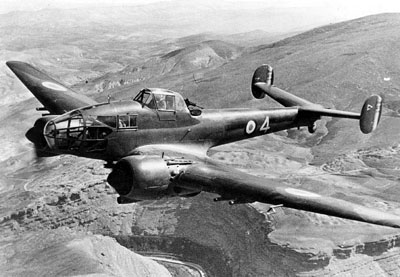
Potez 63-11

A very interesting analysis has been published some years ago by Lt. Colonel F.R. Kirkland, of the US Air Force (in Air University Review, Sept.-Oct. 1985):
"Pilots in operational units wanted an ultrafast singleseater for long-range reconnaissance and a light two-seater capable of landing on unimproved fields for short-range observation missions. 
The air staff, preoccupied with political issues and indifferent to the views of men on squadron duty, ordered the Potez 63.11, the fastest, heaviest, most complex observation plane in the world. With a top speed of 264 miles per hour, it was 40 miles per hour faster than its German counterpart (Henschel Hs 126 B) and 50 miles per hour faster than the British Lysander. 
With twelve machine guns, it was the most heavily armed machine in any air force. 
Too fast and heavy to land on improvised strips yet too slow to escape German fighters, it was an elegant and graceful coffin for its crews."


My purpose today is to wonder about the relevance of some tactical concepts illustrated by the losses of the observations planes. 

French miltary deciders acting during the pre-War period were completely focalized on the speed of the planes that they want to buy (but for fighters...). 

They had forgotten that, at war, the success never relies on a single quality.


The strafing aircrafts punching the airfields


That was the first cause of losses I will discuss and it was the most avoidable: Dozens of planes were destroyed or heavily damaged this way. 


Concealment of the planes, or protecting them with merlons, were known solutions used by some fighter units (as, for example, the GC I/5 under the command of Cdt Murtin). 


Another solution could have been to put the observation squadron airfields far away from the front line


For the greedy Bf 109 E, a run increased by 200 km above the French territories could have been a bit problematic.


The last defense was, at last, the AA gun fire

However, our AA artillery soldiers were not thoroughly trained to such a fight, they were neither accustomed to plane recognition nor to the real gun fire on mobile target (it was the responsibility of the high ranking command, not of the soldiers).


The German Flak


That was the second cause of losses. 

Among the acknowledged 106 Potez 63-11 directly downed by the Germans, 50 were destroyed by AA fire, most of them by the awful 20 mm guns of the light Flak.

This Flak had almost completely forbidden to fly under the 2,000m (6,600 fts) level.


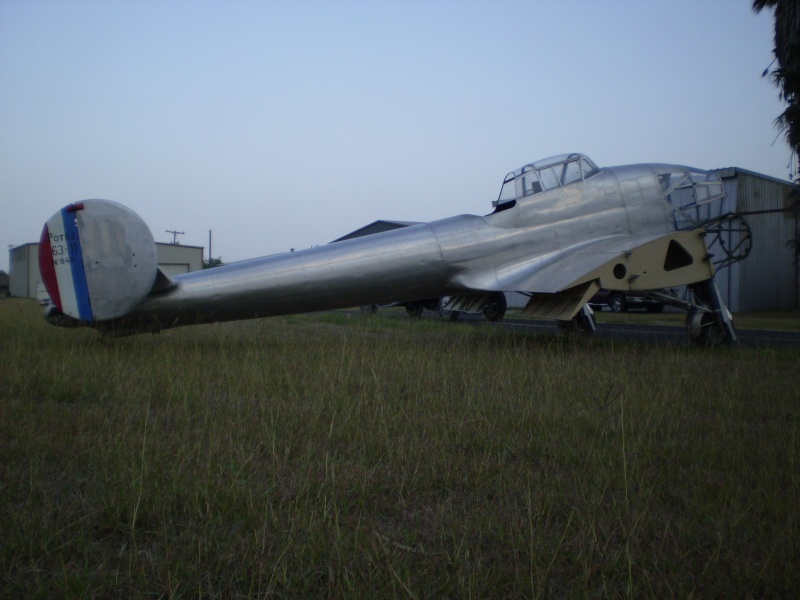
Potez 63-11 - An amazing replica build by Mr Garric in the USA as it appeared in 2009


If you are wondering why the French observation or recce planes flew at so uncomfortable altitude during the whole Battle of France, the first answer is: It was by orders of their Generals. 

The true answer might be found in the WWI practices:The observation and recce flights were not seen as different, the balloons were at risk, but the observers flying at a 2000' altitude were quite comfortable to see what they need to see. 

You can read my other blog, L'Aviation selon Drix, in French, to have an idea of the actual work from war letters of my own Grandfather André Delpey to my GrandMother, when he was photo analyst in a recce squadron (MF22) from the end of 1916 to the victory of 1918.

In 1939-1940, the men in command were all WWI veterans, chosen for their outstanding courage. 

But very few were fans of technology... 


The newborn WWII was completely different but only the young pilots were knowing that.


Using the Potez, the solutions were either to fly over that "light Flak ceiling" while using better optical devices to get good pictures or to fly at a more high level until the place to be observed was sufficiently close and to dive as fast as possible until 20 m AGL.


German fighters


The last cause of losses was obviously the Jagdwaffe, for which this job was absolutely critical.


Some French pilots or gunners have downed their ennemies. 

But, almost all of them perished in the final crash of their planes. 


Ok, the Potez, even in the 63-11 version, was very nimble.

But, also, the crews were very poor radio-users, they did not know the frequency to call for a fighter help. 

The escort by French fighters was quite impossible, as the more numerous available fighters were the Morane 406, which were slower than the Potez!


Criminal blindness


The most sad thing in this story is that the report delivered by these heroic men were rarely taken into account by their generals!

When an officer had reported, the May 12, that he had seen many tanks in the vicinity of Sedan, the staff officer of the 9th Army, of more high rank, answered him: "if the Germans were so close to Sedan, we were already knowing that !".