In 1938, for France, the common sens would have been to go to war with Hitler's Germany, even without any approbation of our British Allies.
The rationale is as follow.
Theoretically, France had, actually, two allies on the East part of Europe: Poland and Czechoslovakia.
If the first one was much more populated, the second one had numerous military assets!
But the Poland dictatorship suffered of huge tactical weaknesses:
- Its territories were open to most of its potential enemies (USSR and German Third Reich):
- A completely obsolete military policy:
- no sufficiently numerous and efficient armored vehicles,
- no efficient and sufficiently numerous fighter planes,
- too few bombers,
- an amazingly scarce artillery endowment for their numerous Infantry divisions (1/5 of the German ones!),
- A foreign policy deliberately hostile to its most powerful neighbor, the USSR, and, simultaneously, no real allies.
 |
| Physical map of the today Poland: The Westward shift of Poland by the Potsdam agreement, logically, annihilated the East Prussia. But the mountains stay only in the South, protecting Poland only against Czechoslovakia! |
Military speaking, Czechoslovakia was in a considerably better shape than Poland, with a real Air Force, good tanks and armored vehicles.
So, we may focus our attention on an amazing Czechoslovakian fighter, the Avia B 534, which was really superior to the more recent British Gloster Gladiator.
The huge moral weakness and the short sighted policy of many French (and British) politicians forbade us to see how this fighter was a game changer, if used at the right time.
A really useful biplane fighter
This little fighter have been designed by the Czech engineer František Novotný.
She was of classical structure, built with welded high tensile steel tubes with fabric covering, as was also the British Hurricane fighter.
She was 8.10 m long and weighted 1,440 kg empty and 1,980 kg for take off.
The wingspan was 9.40 m and the total wing area was 23.56 m². So, the wing loading was 84 kg/m², allowing an excellent maneuverability.
The engine was a Hispano-Suiza 12 Ydrs licence produced by Avia and delivering 850 Cv at 3,200 m.
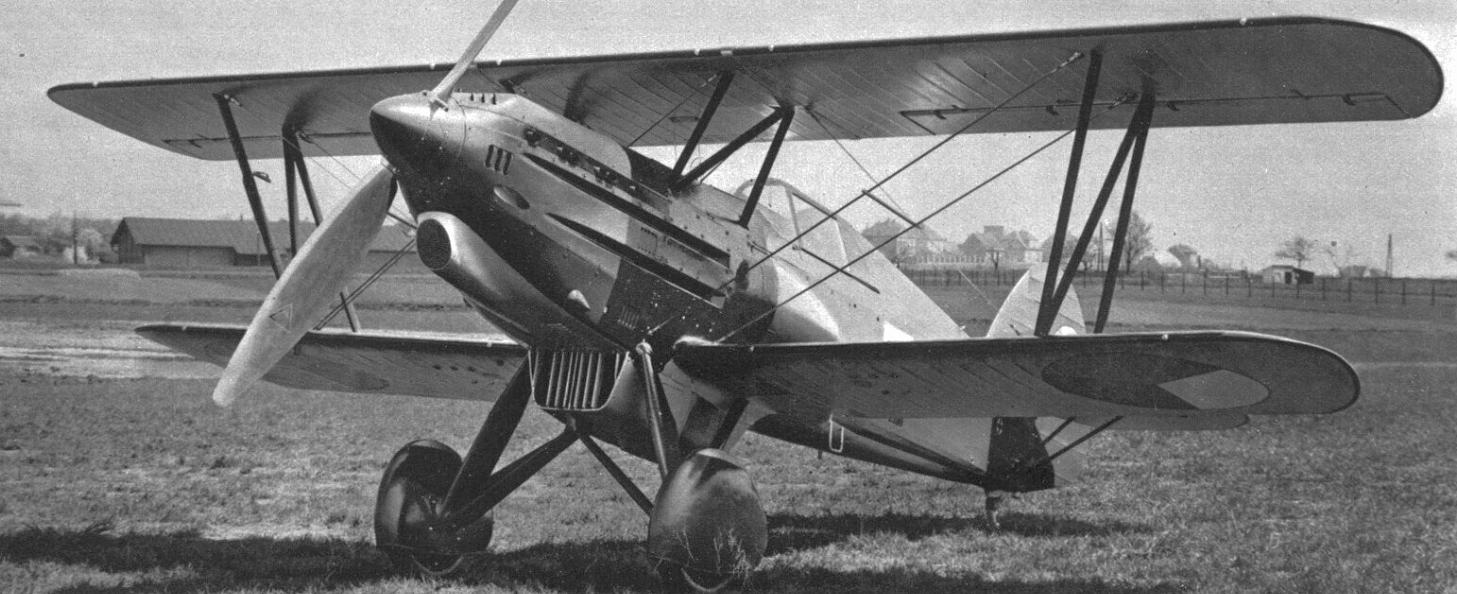 |
| -Avia B 534 of the 3rd series - The air intake was designed to overcome the boundary layer problems, but the radiator seemed not to take into account the Meredith effect, unfortunately. |
The first flight of this fighter was successfully made the 25 of May, 1933.
Immediately, the engineers understood this aircraft had even better potentialities and the following prototypes were significantly perfected and series production was ordered in 1934.
The fuselage was well streamlined, allowing a top speed of 395 kph (in the literature, you may found from 37 kph to 410 kph following the variants).
With backward exhaust pipes, this fighter would have been able to fly at list 15 kph faster!
An other source have given an economic cruising speed of 300 kph.
The B 534 was typically a target defense interceptor as were also the Messerschmitt 109 and the Spitfire.
The main asset of this fighter was an amazingly good climb speed:
- The service ceiling was 10,600 m (to be compared to the 8,000 m of the Polish PZL 11C).
- The time for 5,000 m was 5' 30" (some sources wrote 4' 28"), i.e. from 1 to 2 minutes faster than the Messerschmitt 109 E of May 1940!
{The B 634 was the last and the best streamlined variant of the Avia biplane fighter.
But, at the time this prototype was flying, Avia unveiled the B 35, a monoplane fighter which used a fixed landing gear.
This new fighter demonstrated excellent flying qualities and her top speed exceeded those of the B 534 by 100 kph.
Unfortunately, during a fly past at low altitude and at very high speed, the test pilot, not accustomed to such a speed; tried a too tight maneuver, triggering the fatal crash of his aircraft.}
Facing the Avia B 534, Germany may used initially of early Messerschmitt 109 C or D whose engines delivered about 700 hp, weighted 350 kg more for take off and were using of a similar armament.
Monoplane and fitted with a retractable landing gear, these Bf 109 variants were able to fly only 50 to 60 kph faster than the B 534.
However, their climbing time was, by far, not so good, their operational ceiling was 2,000 m lower, these two flaws allowing the Czechoslovakian pilots to catch them by surprise.
As they were also very far to demonstrate a maneuverability similar to the one of the B 534.
Moreover, in July 1938, 50% of the Bf 109 were unable to fly: In other words, entering simultaneously in war with France and Czechoslovakia in the Fall of 1938, the Hitlers's Germany had no "roof" to protect the German peoples from any aerial strikes.
The Czech pilots who fought brilliantly in France from 1939 to June 1940 demonstrated theirs excellent qualities of fighters pilots, of their excellent marksmanship and of their good tactical sense.
In the case of aerial battle, the Messerschmitt fighters facing the B 534 would have been in a very similar situation than the US P 40 fighters against the Japanese A6M2 Zéro fighters in 1942.
The only advantage of the German fighter pilots was their excellent Freya radars, once they were operating!
Nevertheless, in his war memory, Adolph Galland reported, in the beginning of the Phoney War (in the Fall of 1939), a scramble of all the wing after an alert, this resulting of the downing of a Bf 108 Taifun in which was a high ranking Luftwaffe officer!
The Czecoslovakia war (starting point for a possible What if...)
Caution : Any "What if" is a pure fiction.This may be used as a demonstration that, at a precise moment in the History, other choices would have created a completely different fate for a lot of peoples in numerous countries.
I'm ignoring the degree of efficiency the Sudetenland peoples might exerted in sabotaging the capacity of the Czechoslovakian Army: That is the main objection to my "What if...".
The possibilities of the Avia fighter as I described previously regard only the 1938-1940 period and facing the Luftwaffe.
The real question is: Was France really at risk against an overwhelming Wehrmacht at the end of 1938, when French Premier Daladier was still wanting to save Czechoslovakia?
Some real facts
In 1938, Czechoslovakia was the most powerful and the most reliable Ally for France since 1918 (remember, since the 20's, United Kingdom favored the German rearming and, simultaneously, was repeatedly objecting against our own rearmament).
The Czech part is almost entirely surrounded by mountains and the Slovakian territories consist mainly in mountainous regions, excepted in the plain where flows the Danube, which is also a mighty natural break.
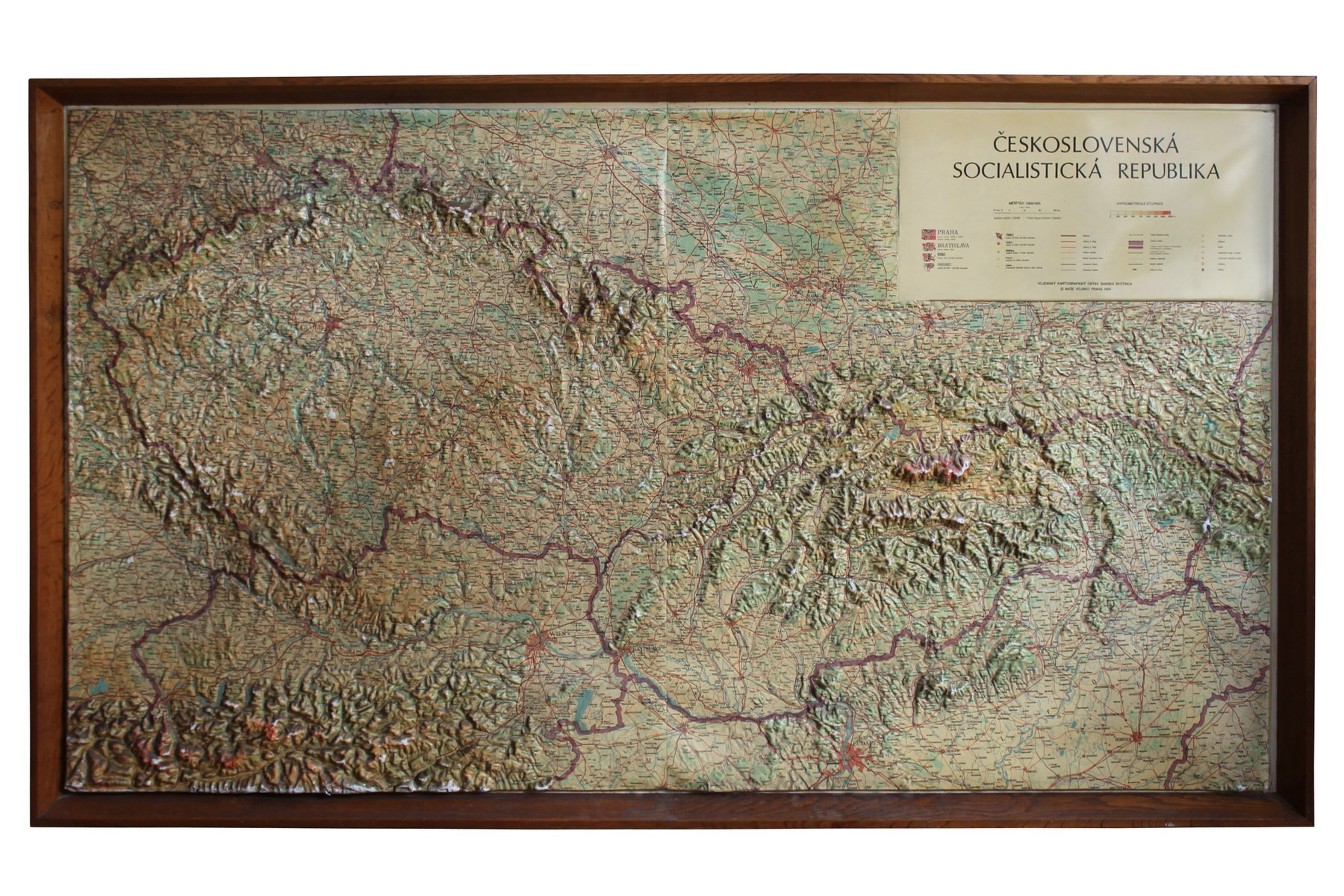 |
| Mountainous terrain of Czechoslovakia in 1969 (very similar to the one of 1938) - |
Moreover, the numerous forests reduced the capacity to detect troop displacements on the ground.
So, the penetration of an enemy army in such a country was not a walk in the park (I personally knew, in 1965, a Hungarian scientist who had fought successfully against the Wehrmacht together with the Slovakian Resistance in Slovakia)!
For the Wehrmacht, it might appeared rather similar to the penetration in a very large Ardennes massif (alone, the today Czech Republic has more than twice the total area of Belgium).
Nothing to see with Poland (in August 1965, I was driving car in these two country: The Czech roads constituted a much better training area than the Polish ones!)
From the other hand, the Czechoslovakian fortifications were not so easy to break through.
General Guderian (in Heinz Guderian, Erinnerungen eines Soldaten) wrote, after WWII, these fortifications were not so impressive than it was commonly said.
Nevertheless, he wrote also the Wehrmacht would have experienced too much unnecessary human casualties.
It was especially true because the Czechoslovakian Army had already mobilized 33 divisions in 1938.
That is very differed greatly from the Polish army which, in Septembre 1939, began only to mobilize troops after the entry of the German troops in Poland.
The Czechoslovakian armored units totaled about 350 Skoda LT vz. 35 tanks, fairly armored, fast, well armed and easy to handle. They appeared as equivalent to the Pz III.
Czechoslovakia was about to use of a even better tank, the LT vz. 38.
Today (and repeatedly), several authors wrote an inappropriate argument: They argue that 350 tanks of the armored Czechoslovakian Army could be overwhelmed by the 1,900 German tanks available in 1938.
These so-called tanks gathered only Pz I and Pz II which were, in fact, only light armored vehicles devoid of efficient armor (the thickness exceeding rarely 16 mm in 1938).
So, each Czechoslovakian tank would had no difficulty to destroy them in great number.
(Remember, on year later the Polish soldiers destroyed a lot of them with their Boys anti-tank riffles.)
The Panzers III were at an experimental status (and were vulnerable to the Czech 37 mm cannon) and the Pz IV was in an even less advanced status.
General Guderian (in Heinz Guderian, Erinnerungen eines Soldaten) wrote, after WWII, these fortifications were not so impressive than it was commonly said.
Nevertheless, he wrote also the Wehrmacht would have experienced too much unnecessary human casualties.
It was especially true because the Czechoslovakian Army had already mobilized 33 divisions in 1938.
That is very differed greatly from the Polish army which, in Septembre 1939, began only to mobilize troops after the entry of the German troops in Poland.
The Czechoslovakian armored units totaled about 350 Skoda LT vz. 35 tanks, fairly armored, fast, well armed and easy to handle. They appeared as equivalent to the Pz III.
.JPG/1280px-Belgrade_Military_Museum_-_PzKpfw_35(t).JPG) |
| Škoda LT vz 35 : Agile, reliable, fitted with a 37 mm cannon (V0 of 675 m/s), these tank was able to destroy easily almost all German tank Pz I, Pz II and Pz III. Its only dreadful opponent was the Pz IV (which was far from operational status). |
Czechoslovakia was about to use of a even better tank, the LT vz. 38.
Today (and repeatedly), several authors wrote an inappropriate argument: They argue that 350 tanks of the armored Czechoslovakian Army could be overwhelmed by the 1,900 German tanks available in 1938.
These so-called tanks gathered only Pz I and Pz II which were, in fact, only light armored vehicles devoid of efficient armor (the thickness exceeding rarely 16 mm in 1938).
So, each Czechoslovakian tank would had no difficulty to destroy them in great number.
(Remember, on year later the Polish soldiers destroyed a lot of them with their Boys anti-tank riffles.)
The Panzers III were at an experimental status (and were vulnerable to the Czech 37 mm cannon) and the Pz IV was in an even less advanced status.
A German author, Mr Milan Hauner, highlights very thoroughly all the difficulties occurring for Czechoslovakia facing the Wehrmacht in September 1938.
He appears to neglect the Czechoslovakian Air Force, on the pretext that this force consisted mainly of biplane fighters Avia B 534 and that it gathered only 200 bombers.
But that was not true in the Summer of 1938 : The Czechoslovakian "fighter command" was a very rude adversary for the actual Luftwaffe.
The meteorological factor was also completely absent from Mr. Hauner's conceptions.
In Fall, France is subject to succession of meteorological depressions which carry a lot of nimbostratus (storm clouds) displacing following mainly a West - East direction.
This might have very strong repercussions on the managing of any aerial warfare: The French airmen would had the knowledge of the future weather that the German ones could not have.
In Czechoslovakia, e.g. at Prague, the first days of October may be rainy, later, the weather became a little more sunny, with frequent morning fogs (which favored ambushes).
During the following weeks, the temperatures decrease strongly.
Winter begins really in November with numerous snow falls.
Likely, the Germans should attempted to intimidate the populations, using the bombing of the largest city of the country, as they do in May 1940 at Rotterdam.
Today, we know the Wehrmacht of 1938 was not "winter proof"!
Anyway, Germans must have sufficient forces to confront with France, this implying to conserve a lot of bombers and fighters.
Germany was absolutely not immune from Czechoslovakian raids!
Inside the Luftwaffe, the Dornier 17 D / F bombers were almost all involved in the Spain Civil War where their performances were seen, in 1938, as no more efficient.
In Germany, some 500 examples belonged to the Dornier 17 M / P variants, and the B variant was just about to be delivered.
The much more powerful Heinkel 111 C might be specialized for the long and fast offensive raids.
They would likely be used for French objectives (insofar the French military deciders demonstrated a strong reaction).
In 1938, the twin-engined Junkers 86 was the most frequent German bomber with 600 examples.
These aircrafts were 18 m long and had a take off weight of about 8,000 kg.
The wingspan was 22.50 m and the wing area totaled 82 m², allowing the very low wing loading of 100 kg/m².
 |
| Junnckers 86 A or D - |
The two diesel engines Junkers Jumo 205 C-4 of this bomber delivered 600 hp, allowing a normal bomb load of 800 kg.
Her top speed was 325 kph at 3,000 m.
The service ceiling of the Ju 86 was 5,900 m : So, the normal flight level had few chance to exceed 4,000 m.
In top speed, the Junkers was similar to that of her French counterpart Bloch 210 but her bomb load was 50 % of that of the Bloch and her ceiling was 60% less high...
This bomber had no chance against the Avia B 534.
{Parenthesis: In Wikipedia, you may found essentially informations on the stratospheric variant Ju 86 P which did not exist at all in 1938.
This high altitude recco-bomber was first seen over Great Britain, during the final part of BoB, demonstrating an operational ceiling of 12,000 m without opponent before 1942 until the Spitfire Mk VII entered operational service.
If this bomber variant was technically interesting, its strategical interest was rather weak.}
OK, in 1938, Germany had about 1,300 to 1,500 bombers, but the Jagdwaffe had only 600 Bf 109 with a doubtful reliability (50% were not available in July 1938).
As wrote Adolphe Galland after WW II, politicians and generals always imagine the Mastering of the Air may be obtain only by bombing.
Nevertheless, once their bombers will be flying towards the enemy territories, they became the preys of the enemy fighters, but when they benefited from a strong protection.
At the end of October 1940, Hitler was forced to fall back on the less effective night bombing to stop the loss of bombers and of their valuable crews, decimated by the strong aerial battles occurring from the May 10, 1940 to the Fall of that year (Battle of Britain).
- Poland would stay neutral, with a focus against its Ost boundary with USSR.
- Italia would be also neutral, but with a temptation to enter in Albania.
- The Great-Britain would have been divided between pro-Hitler and anti-Hitler. It would be not easy for Mr Chamberlain to condemn France and Czechoslovakia without tarnishing his international image .
The climbing to 5,000 m with the B 534 consumed about 5', so the German bombers were attacked 10 to 15 minutes after the take off of the B 534.
We know also the German bombers of 1938 suffered a strong adverse influence of the bomb load on their top speed : A fully loaded He 111 was unable to exceed 300 kph...) .
The attacks of the Czechoslovakian fighters on the German bombers could result in a better score than the one obtained by French and Allied fighters achieved the May 10, 1940.
Such good result of the better climb speed of the B 534, on the clearly slower German bombers as, also, in the division of the existing bombers in two fleets: One for the French front and one for the Czech front.
One may also take into account the Jagdwaffe was, in 1938, about one third of the power facing the Allies in 1940. It would also have been necessarily divided in two.
The 20 to 80 Potez 630 and 631 long range fighters, already in service in the French Armée de l'Air, being as fast as was the Bf 109 D, they were not easy prey for them, so, some of them they might play an in-flight early warning role.
If the French fighting planes have consisted in Nieuport 161, the mastery of the Air would have been instantly achieved.
Nevertheless, in the historical case the Curtiss H 75, D 510, D 501 et Spad 510 would have been also extremely dangerous for the Luftwaffe.
In the case of an Allied attack, the Bf 109 C / D needed 8 minutes to reach the same altitude (10 minutes for 6.000 m).
They had an as short range than the Bf 109 E of the Battle of Britain because their fuel tank were of smaller dimension (337 liters)...
The Czechoslovakian bombers
Some sources attribute 200 bombers to the Czechoslovakian Air force.
For the End of the 1938 Summer, it had :
- 54 Bloch 200 bombers, seen as rather efficient for night bombing. They had, in the Czechoslovakian production only, a more important bomb load of 1,400 kg (instead of 1,200 kg in the French production) and 5 machine guns (instead of 3 in the original product) for its defense .
 |
| Document of the author - a French MB 200 |
- About 60 Tupolev SB for daylight bombing, able to deliver a bomb load of 600 kg ,
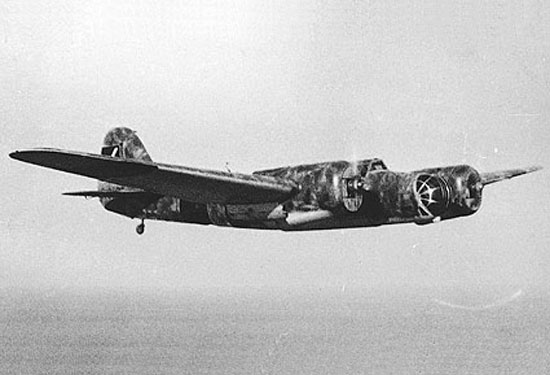 |
| Tupelev SB - from 425 to 450 kph. |
- At least, 400 Letov S 328 biplanes able to recce and bombing missions (with a bomb load of 500 kg). The exceptional maneuverability of these Letov 328 would favor their use for harassing the enemy columns, as the Germans will do with their rather similar Henshel 123.
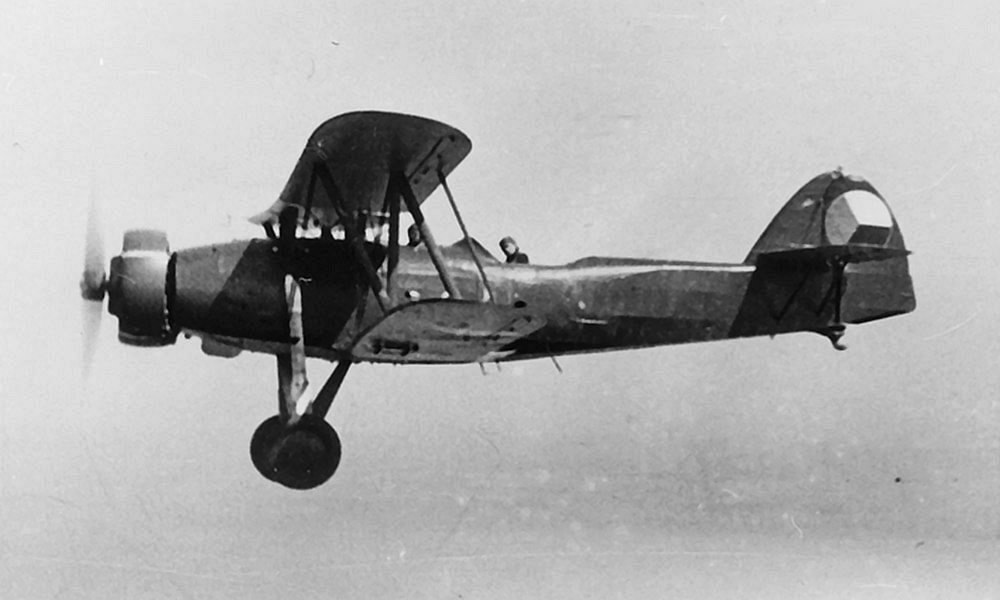 |
| Letov 328 - |
Quid of the USSR?
The Soviet Union wanted a free passing through Poland territories in order to go to Czechoslovakia.
If France had a real high level foreign minister, instead of the poor Mr. Georges Bonnet, it would be possible to answer two point to the Stalin's demand:
- France will be an active player in this crisis. So, all European countries would clearly understand who will be their real allies against Hitler.
- Nobody was able to prevented URSS land troops in Eastern Prussia.
At this moment, USSR disposed of a non negligible fleet of submarines, cruisers and destroyers (and even of rather powerful battleships) which might represented a thread for the Kriegsmarine in Baltic.
From the other hand, the Red Army had several thousand of T26 and BT tanks, which appeared very powerful in 1938.
They were very fast (Christie suspension) and they had a 45 mm cannon efficient at more than 1 km.
 |
| Soviét tank BT 5 - The triumph of the Christie suspension: 72 kph on the wheels, 52 kph on caterpillars) |
The Soviet Aviation was very numerous with some thousand of fast fighters as the Polikarpov I 16 and of SB bombers faster than the German bombers and hard for the German fighters.
 |
| Tupolev TB 3 - A very heavy bomber loaded with two fighter-bombaers I 16 (with two 250 kg bombs each) displaying her capability to carry a load of 5 tons (in 1941) ! |
USSR might use also of 800 bombers Tupolev TB 3 able to carry easily 5 tons of bombs, or dozens of paratroopers.
This bomber was 25 m long.
Her wingspan was 40 m and the wing area exceeded 230 m².
She had a weight of 12,600 kg empty and from 19,000 to 24,000 kg for take off (following the variants).
She had a top speed of 288 kph at 4,000 m (source : Wikipedia in deutscher Sprache of the March 9, 2019).
There were no difficulty for 350 TB 3 to carry 8,000 of para troopers over Eastern Prussia after an intense night bombing!
The French Armée de l'Air
For the 1938, the bomber units of France used of:
- 190 Bloch 200 (for night bombing),
- 140 Amiot 143,
- 150 Potez 540,
- 240 Bloch 210,
- 60 Bloch 131,
- 30 Farman 222-2.
France had about 800 bombers.
Knowing that fourteen Amiot 143 have been send at daylight, the 14 of May, 1940, over the Sedan town occupied by the Guderian's Panzer divisions, while flying at only 750 m AGL.
Knowing that except the two bombers downed, and one landed in the fields inside the French lines, the others bombers, severely damaged, returned to their airfield (but were not repaired). So, the real score was 3 absolute losses and ten damaged bombers...
OK, they have been escorted by 12 MS 406 (!).
Are you thinking seriously these bombers would have suffered more losses against the 1938 Jagdwaffe than 2 years later, facing better armed and 100 kph faster fighters?
Ok, the survival of French bomber crews would have been very better if the Bréguet 462 have been ordered at the end of 1936 and the Amiot 340 during the Summer of 1937.
Epilogue and provisional conclusion
Early in 19398, the Czechoslovakian government proposed to sell to France, for a very low price, 200 Avia B 534 (source: L'Aviation de Chasse Française, 1918-1940, Cuny & Danel, Docavia #2, p. 144). The proposal was exceptionally interesting.
Unfortunately, the French deciders refused, because they were not aware of the great chance that was for our armies: Such excellent fighters were available for numerous very useful first line purposes.
The Morane 406 were very few (25 copies delivered for the end of 1938) and also completely outclassed by the Spad 510, which was slower than the Avia fighter.
After the availability of new and better fighters, the Avia B 534 could have been used in a secondary defense line, 150 to 200 km inside the French boundaries.
Even bigger mistakes have been done by Mr Daladier during the Sudeten crisis.
They were announced by the inappropriate Vuillemin's visit in Germany.
This honest man was not able to decipher properly the brain of the completely dishonest Marshall Goering!
Instead, our general might have visited Prague and Bratislava.
- The first mistake was to refuse the tripartite discussion with USSR and Czechoslovakia. Some tactical agreements were easy to finalize. The literature said sixty soviet divisions were ready to help the Czechoslovakian army...
- The second mistake was to follow the English politician Neville Chamberlain in his completely unrealistic proposals! The French Premier had only to refuse any discussion on Czechoslovakia in the absence of this country and of the USSR.
- The last mistake was to wait before the order of mobilization of the French Army. Hitler's generals were not happy to resume the World War. Some seemed ready to eliminate their Fuehrer. Our capitulation was seen by these persons as a demonstration that Hitler was right!...
I want, at last, to highlight the extraordinary short geopolitical sighting of Colonel Beck, the 1938 minister of Poland.
Mr Beck, instead of backing the Czechoslovakian, backed the German point of view in order to obtain the Teschen town as a tips!
Obviously, the Wehrmacht attacked the Poland, with the help of USSR.
Without any immediately active Allies, Poland was defeated in three weeks...
Early in 19398, the Czechoslovakian government proposed to sell to France, for a very low price, 200 Avia B 534 (source: L'Aviation de Chasse Française, 1918-1940, Cuny & Danel, Docavia #2, p. 144). The proposal was exceptionally interesting.
Even bigger mistakes have been done by Mr Daladier during the Sudeten crisis.
Unfortunately, the French deciders refused, because they were not aware of the great chance that was for our armies: Such excellent fighters were available for numerous very useful first line purposes.
The Morane 406 were very few (25 copies delivered for the end of 1938) and also completely outclassed by the Spad 510, which was slower than the Avia fighter.
After the availability of new and better fighters, the Avia B 534 could have been used in a secondary defense line, 150 to 200 km inside the French boundaries.
They were announced by the inappropriate Vuillemin's visit in Germany.
This honest man was not able to decipher properly the brain of the completely dishonest Marshall Goering!
Instead, our general might have visited Prague and Bratislava.
- The first mistake was to refuse the tripartite discussion with USSR and Czechoslovakia. Some tactical agreements were easy to finalize. The literature said sixty soviet divisions were ready to help the Czechoslovakian army...
- The second mistake was to follow the English politician Neville Chamberlain in his completely unrealistic proposals! The French Premier had only to refuse any discussion on Czechoslovakia in the absence of this country and of the USSR.
- The last mistake was to wait before the order of mobilization of the French Army. Hitler's generals were not happy to resume the World War. Some seemed ready to eliminate their Fuehrer. Our capitulation was seen by these persons as a demonstration that Hitler was right!...
I want, at last, to highlight the extraordinary short geopolitical sighting of Colonel Beck, the 1938 minister of Poland.
Without any immediately active Allies, Poland was defeated in three weeks...


